Omar Sakr and I spoke to Jacobin’s Chris Dite about State Library Victoria, the escalating persecution of pro-Palestine workers in arts and media, and how workers across industries are joining together to fight back.
Genocide is impolite to talk about but not to enact. Safety means Zionists’ feelings and not Palestinians’ lives.
Like many of us, I’ve felt wary of drawing focus from the daily atrocities in Palestine to comparatively petty art world disputes here. I worry the story becomes one of cultural contestation instead of genocide.
But Israel’s genocide relies upon misinformation, censorship & propaganda. Misinformation and media bias have been critical in engineering impunity. I think the Library’s framing of ‘child and cultural safety’ is important, and dangerous, and deliberate.
For six months we have seen Israeli propaganda deny that Palestinian children are children. Think of Deborah Conway on ABC Radio National when asked about all the children killed: ‘Well it depends what you call kids.’ So I think this perversion of ‘child and cultural safety’ needs to be directly challenged.
In November last year I was invited to imagine a parallel world without gender as part of an event at Melbourne Conversations. ABC recently broadcast those dispatches from the multiverse on Big Ideas with Natasha Mitchell, you can hear it here.
Disheartening news this week on the eve of IDAHOBIT that Beijing LGBT Center has been forced to shut. Beitong, as it was known in the community, was the leading NGO for queer advocacy and research in China, as well as providing important welfare and peer support services. Our paths crossed frequently over the years that I was reporting on LGBTIQ+ issues in China, so this loss feels quite devastating both personally and politically – the China I knew and loved is being eroded piece by piece.
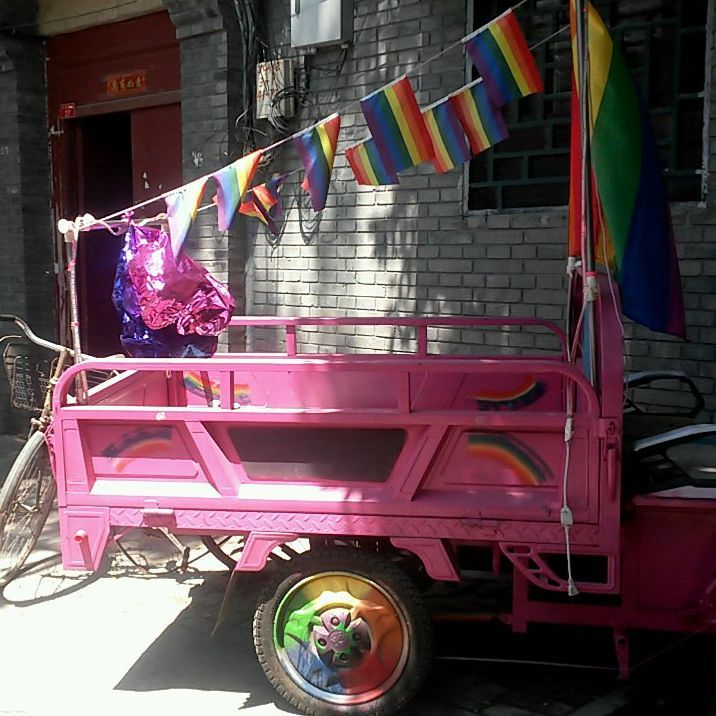
Beijing’s NGO community made such a big impression on me but a lot of what I remember is already gone. Q-Space, where this was taken, closed their physical space in 2020.
Foreign Policy has a good analysis of Beitong’s closure in the context of a natalist push for gender normativity, heterosexual marriage, and more babymaking to rebalance the country’s demographic woes. I’m quoted there, as well as in articles by the AFP and Bloomberg wires that have been syndicated pretty widely. I also gave NBC an interview for their story that should be out soon – I’ll add it to my press page when it’s published.
Beijing LGBT+ Center is absolutely pivotal to queer advocacy and social welfare in China and it was basically the last major, long-running organisation standing after waves of crackdowns smashed everything else.
It just feels so utterly hopeless. I know that queers & feminists in China know how to work a loophole, a cat door, a hairline fracture, a whisper, a metaphor, but soon that's too subtle and quiet to reach the people who need it. A secret handshake can't replace a lighthouse.
Anyway, it’s pretty cool to go on a late-night tweet spree and then see it translated into half a dozen different languages, but disappointing that so many media outlets remain inattentive to gendered language, even when reporting an LGBTIQ+ story. My pronouns have been in my Twitter bio since I started the account, and in my website bio and email signature (ey/eir/em, they/their/them, 伊 or TA).
It’s ironic too, because what I’m most proud of from my time in China journalism was building up LGBTIQ+ and gender reporting into beats that were taken seriously and resourced appropriately, and integrating that area expertise into editorial processes, ethics and house style. Using the correct pronouns for someone is just one very small part of that but often revealing of broader priorities. It’s something that Beitong and their peers like Tongyu and BGHEI invested in, too, with media guidelines, training, analysis and awards. So I hope media outlets take stock and use events like IDAHOBIT and Pride as an opportunity to consider how they could improve their LGBTIQ+ reporting.
A little while ago I spoke to New York Times contributor Brian Ng about airlines failing nonbinary passengers in their booking systems while pursuing the pink dollar. Read or listen to the story below.
Brian Ng investigates the sluggishness of airlines in adopting options for nonbinary travellers in the gender and title fields of their booking engines, despite legal recognition in many countries. New York Times, 22 June 2022.
Big thanks to Brian for pursuing this story, and shoutout also to photographer Asanka Brendon Ratnayake – I am so awkward in front of a camera but he really put me at ease and we had a nice chat about NYT Australia and journalism in Asia, Australia and the US.
Since I started teaching, I’ve said yes to every student journalist who’s wanted to interview me in the hopes that it earns karma for my students.
Not sure if that’s an effective strategy, but here are a couple of the stories: I spoke to Swinburne’s The Wind Down podcast about the Chinese video games industry clamping down on queer narratives, and Robbie Mason from USyd’s Pulp mag about freelancing in this economy.
I was on the radio last week chatting to Tim Shiel about Wuhan punk and Chinese rock music more broadly. Catch up here if you missed it. Big thanks to Tim and Dylan for having me on!
If you want to watch me on the telly, I’m in the new season of the ABC series You Can’t Ask That in an episode about Chinese Australians. Stream it on iview or wait for it to air every Wednesday at 9pm (I’m on June 9).
Liz and I were on Radio National this morning talking with Jonathan Green about the secret histories of Footscray for Blueprint’s Sense of Place segment. Listen to the show here and check out our Footscray history project, Underfoot.



 Jinghua Qian