Jinghua Qian, ‘Walking away, backwards; or woman-lite in women’s lit’, Feminist Writers Festival, 20 November 2020. Edited by Cher Tan.
When I got asked to write something for Feminist Writers Festival, I started to say no. I typed up a new version of the response I’ve sent so many times that I should probably just save it as a template: Thanks for thinking of me! I really appreciate the invitation, but at present I feel it’s not my place as not-a-woman to take this platform…
But Cher and I chatted a bit more, and I came around to the idea that perhaps this conversation is worth having in public, especially in a feminist literary space.
*
Leaving womanhood reminds me of the apologetic way I exited the church – looking to the altar, sidestepping, genuflecting before turning my back on the cross. I used to be a woman and a Catholic, and it seems that until I commit to a new god or gender, I’ll forever remain a lapsed Catholic and womanish. Woman-lite.
In early 2015, I wrote this poem while on the cusp of leaving:
leaving traces
being a woman costs too much
were it a job I’d have quit
but that’s not it, as such
it feels more like kin
like folks I didn’t choose
but begrudgingly belong to
other women make it
almost worthwhile
but that’s not it as such,
it feels more like a place
that follows me as I leave
like I don’t really speak the language anymore
but somehow it still shows on my face
All these years of wearing
elsewhere in my eyes
can I afford another layer
of answering why I am here
where did I come from
what is my real name
I am solid until I’m touched
then diaspora
one thousand pieces
of wandering
my face already
conveys
too much
*
Whenever I’m asked to speak or write or perform for a feminist event, I see myself go out of body again. For a split second, I slip into a parallel life of being a woman and doing woman things. I mean, I don’t know what ‘woman things’ are – maybe I never did – and probably binary gender is a prison even for cis people. Of course I don’t think that feminism is only for women, or that feminist spaces should necessarily be women’s spaces. But I also know that I’m accepted by the sisterhood because I’m seen as woman-lite. Close enough.
I’m not a woman and I’m not a man. Genderfluid, if I’m forced to answer, or nonbinary, though that doesn’t always fit. It’s okay if you don’t know what that means, because sometimes I don’t either. Whenever I’m asked to identify with a gender, I offer a string of finicky metaphors.
I grew up as a girl. I’ve been referring to myself with gender-neutral pronouns – inconsistently – for the last fifteen years, even when I was cis. I stopped understanding myself as a cis woman around five years ago, but the only thing I did to ‘transition’ was to revert to my birth name. I am still interpreted and interpellated as a woman most of the time. I am not trans enough for most trans people. And I hated writing this paragraph: I hate describing myself in this naked and banal way, but I don’t think any of this will make sense otherwise.
There were two other things I did as part of my ‘transition’ (although that feels like far too momentous a word to describe these reversible administrative tasks). One of them was to ask my friends to refer to me with gender-neutral pronouns. The other was to leave all the women’s groups I was in – mostly networks for women of colour. Even when I was cis, I was never white, so I was never all that comfortable in most Australian feminist spaces to begin with.
The following year, I left the continent. By the time I came back to Australia three years later, a lot of these women’s groups had shifted their remit to accepting various configurations of ‘woman and other’: women and nonbinary folk, for instance, or everyone but cis men. Effectively, these groups feel like women 2.0 or women* or women+. Women – which is to say cis women – and people with footnotes. Women plus women-lite. After all, these are feminist spaces converted from (cis-centric) women’s spaces, and they show their bones.
I joined several groups for writers and editors that still have names like ‘Binders Full of Women’, though their descriptions specify that genderqueer and nonbinary people are included too. Most of the genderqueer and nonbinary people in these spaces seem to be people who were assigned female at birth (AFAB), like me.
Feminist spaces typically welcome AFAB nonbinary people while freezing out nonbinary people who were assigned male at birth (AMAB). Often, there are more AFAB non-women in women’s spaces than there are trans women. As a nonbinary person who is not a woman yet easily accepted as one, my presence in feminist and women’s spaces is often framed as part of a positive shift towards greater trans inclusion: oh, trans people, we have those! But I know the hospitality I receive is frequently also a form of trans erasure – an insistence on seeing us as the genders we were assigned. The overrepresentation of AFAB non-women in these spaces can reinforce the exclusion and marginalisation of AMAB people.
Everyone has their own interpretation of this. I’m not necessarily asking AFAB nonbinary people to withdraw from feminist spaces. Neither am I asking all women’s groups to include nonbinary people. It’s okay to have things that are just for women, as well as things for not-men, as well as things for everyone who wants to see the end of patriarchy. I get that we’re all still figuring out how to do feminism beyond binary gender – it’s an ongoing process of collective political imagination alongside individual calibration. But I’m always reassessing myself in relation to gendered spaces: Is this too woman for me? Am I going to be useful here? Personally, I’m also pretty accustomed to not feeling at home anywhere – and this is often a good thing, a productive tension. The can of worms fertilises the soil.
But whether it’s Feminist Writers Festival, Facebook writers’ groups, or other feminist literary initiatives like the Stella Prize, I think it’s important to remember that you can’t simply tweak the category of woman to accommodate nonbinary people. Nonbinary disturbs the foundations of binary gender because it’s supposed to. It’s intentionally an interruption, a question as well as an identity.
Some nonbinary people would prefer to depoliticise and domesticate it – to say that my being nonbinary doesn’t affect you and your gender, and that it’s just another identity in a sea of gender diversity, that it’s not an ideology. That’s not totally true for me. I do think my gender should make a difference in how you think about yours and vice versa. Gender is relational and mine isn’t constituted in a vacuum. I’m not sorry for making this complicated. Ask me to do a feminist thing, and I have to ask: What is the relationship between feminism and women? What is a woman?


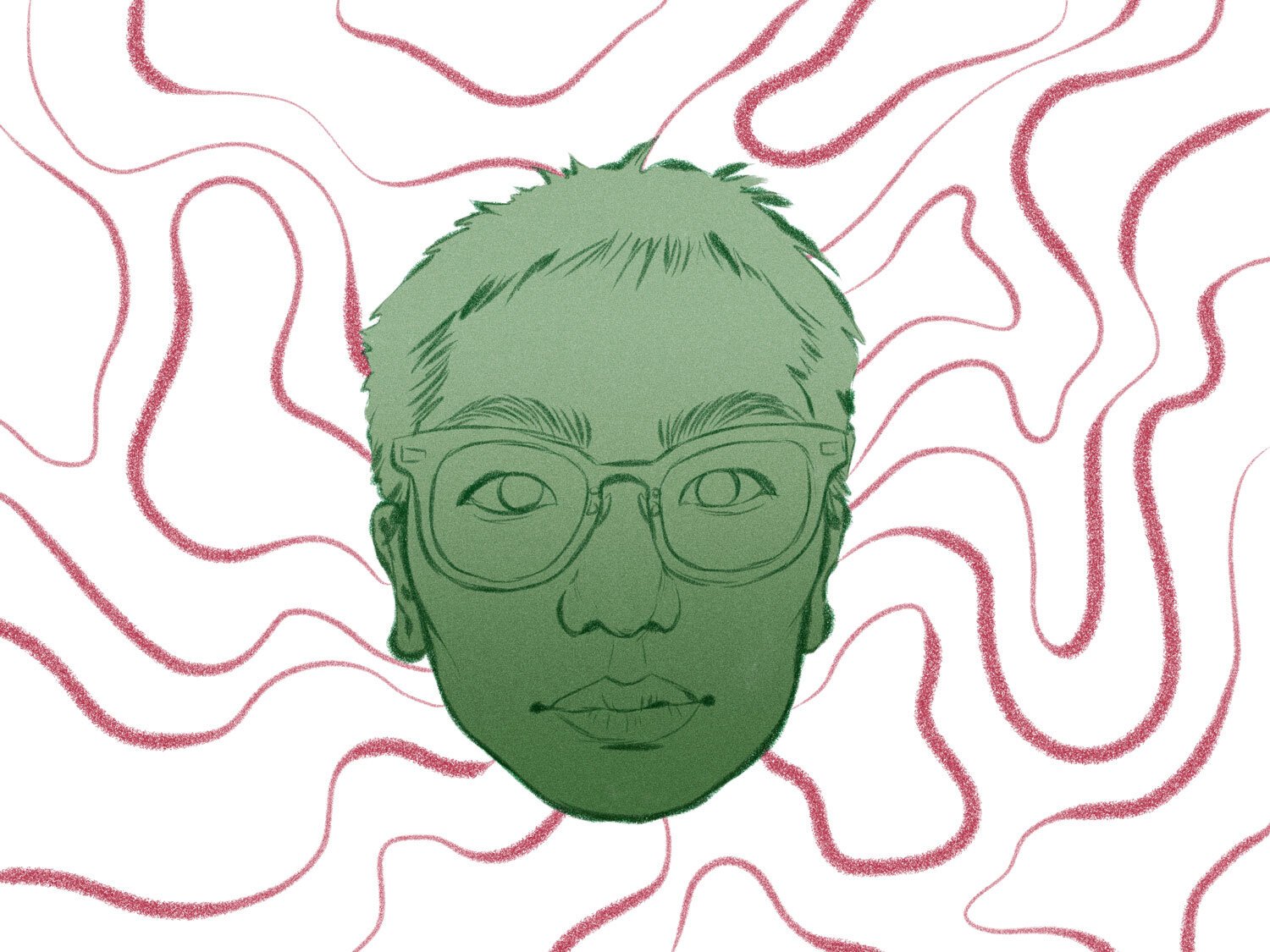
 Jinghua Qian